
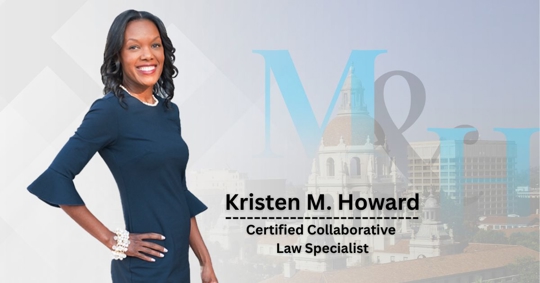
At the Law Offices of Makupson & Howard, excellence in family law has always been rooted in compassion, innovation, and a commitment to better outcomes for clients. Today, the firm is proud to celebrate an exciting milestone: Kristen Howard has been certified as a Collaborative Law Specialist—a distinction that reflects both advanced training and a deep dedication to resolving family disputes in a more constructive way.
This achievement reinforces what clients have long experienced: a firm focused not just on results, but on how those results are achieved.
What This Certification Means
Becoming a Collaborative Law Specialist is more than a credential—it signifies advanced training in a progressive legal approach that prioritizes cooperation over conflict. Collaborative law is a structured process where both parties, along with their attorneys, commit to resolving disputes outside of court through respectful negotiation and full transparency.
This certification demonstrates that the attorneys at Law Offices of Makupson & Howard are not only experienced in traditional litigation, but also highly skilled in guiding clients through alternative dispute resolution methods that can be more efficient, cost-effective, and emotionally supportive.
A Better Way Forward: The Benefits of Collaborative Law
Divorce and family law matters are often emotionally charged, but they don’t have to be adversarial. Collaborative law offers a different path—one that aligns closely with the firm’s longstanding mission to minimize stress and promote positive outcomes for families.
1. Reduced Conflict, Greater Respect
Collaborative law replaces courtroom battles with structured, solution-focused discussions. Instead of “winning” or “losing,” both parties work toward mutually beneficial agreements, helping preserve dignity and respect throughout the process.
2. More Control Over the Outcome
Rather than leaving critical decisions in the hands of a judge, clients maintain control. This allows for customized solutions that reflect the unique needs of each family—especially important when children are involved.
3. Privacy and Confidentiality
Unlike court proceedings, which are part of the public record, collaborative divorce is a private process. This discretion can be invaluable for families seeking to protect sensitive personal and financial information.
4. Cost and Time Efficiency
By avoiding prolonged litigation, collaborative law can significantly reduce both legal fees and the time required to reach a resolution.
5. Healthier Co-Parenting Foundations
Because the process emphasizes communication and cooperation, it often leads to stronger, more sustainable co-parenting relationships—benefiting children in the long term.
Why This Matters for Clients
For years, the Law Offices of Makupson & Howard has emphasized resolving disputes amicably whenever possible, recognizing that litigation is not always the best solution for families.
This new certification is a natural extension of that philosophy. It equips the firm with enhanced tools, strategies, and credentials to help clients navigate divorce and family law matters with less conflict—and more clarity about the future.
Moving Forward with Confidence
Divorce represents a major life transition, but it doesn’t have to be defined by hostility or uncertainty. With Kristen Howard’s certification as a Collaborative Law Specialist, our team at the Law Offices of Makupson & Howard is uniquely positioned to guide clients through a more thoughtful, respectful, and solution-oriented process.
If you are considering divorce or facing a family law issue, exploring collaborative law may be one of the most important decisions you make—for yourself and your family’s future.